How Proton Pump Inhibitors Cause Low Magnesium: The TRPM6 and TRPM7 Mechanism Explained
Proton Pump Inhibitors (PPIs) such as omeprazole, pantoprazole, and esomeprazole cause long-term hypomagnesemia by disrupting intestinal mineral absorption at the cellular level. Specifically, chronic acid suppression alters gastrointestinal pH gradients and deactivates enterocyte TRPM6 and TRPM7 ion channels, halting the active transport of dietary magnesium into the bloodstream. This comprehensive, evidence-based review breaks down the exact pharmacokinetics, clinical symptoms, and biochemical pathways connecting acid reflux medications to chronic mineral depletion.
If you have ever taken a common heartburn medication like omeprazole or pantoprazole for a long time and later experienced unexplained muscle cramps, fatigue, or twitching, you are not alone. Millions of people rely on prescription and over-the-counter acid reflux drugs to manage daily discomfort. However, long-term use is tied to a hidden side effect: hypomagnesemia, or chronically low blood magnesium levels.
Conventional health articles often state this fact simply: “Acid blockers can lower your magnesium.” But they rarely explain how it happens.
To understand the real biochemical chain reaction, we have to look past the stomach, down into the intestines, and right at the microscopic cellular doorways responsible for pulling minerals into your body.
What Are Proton Pump Inhibitors (PPIs)?
Proton Pump Inhibitors—commonly known by brand names like Prilosec, Nexium, and Protonix—are medications designed to reduce stomach acid production. They do this by shutting down the hydrogen-potassium ATPase pumps located inside the parietal cells of your stomach lining.
By blocking these pumps, PPIs successfully relieve acid reflux, ulcers, and gastroesophageal reflux disease (GERD). For short-term use, they are generally safe and effective.
However, your stomach acid is not just a nuisance that causes heartburn. It plays a critical physical role in how your digestive system processes food and extracts vital minerals—especially magnesium. When you suppress acid production for months or years, the chemistry of your entire digestive tract shifts.
The Root Cause: Why Stomach Acid Matters for Mineral Absorption
Magnesium enters your body primarily through your diet—found in leafy greens, nuts, seeds, and whole grains. Once you digest food, magnesium reaches your small intestine in two ways:
Passive Paracellular Transport: This happens when high concentrations of magnesium slip passively through the tiny spaces between intestinal cells.
Active Transcellular Transport: This is an intentional, energy-dependent process where specialized protein channels actively grab magnesium from your gut and pull it inside your body.
While passive absorption works fine when dietary intake is massive, active transport is essential for maintaining steady, healthy mineral levels under normal dietary conditions. And this active transport system depends entirely on a specific biochemical environment.
Enter the Gatekeepers: TRPM6 and TRPM7 Ion Channels
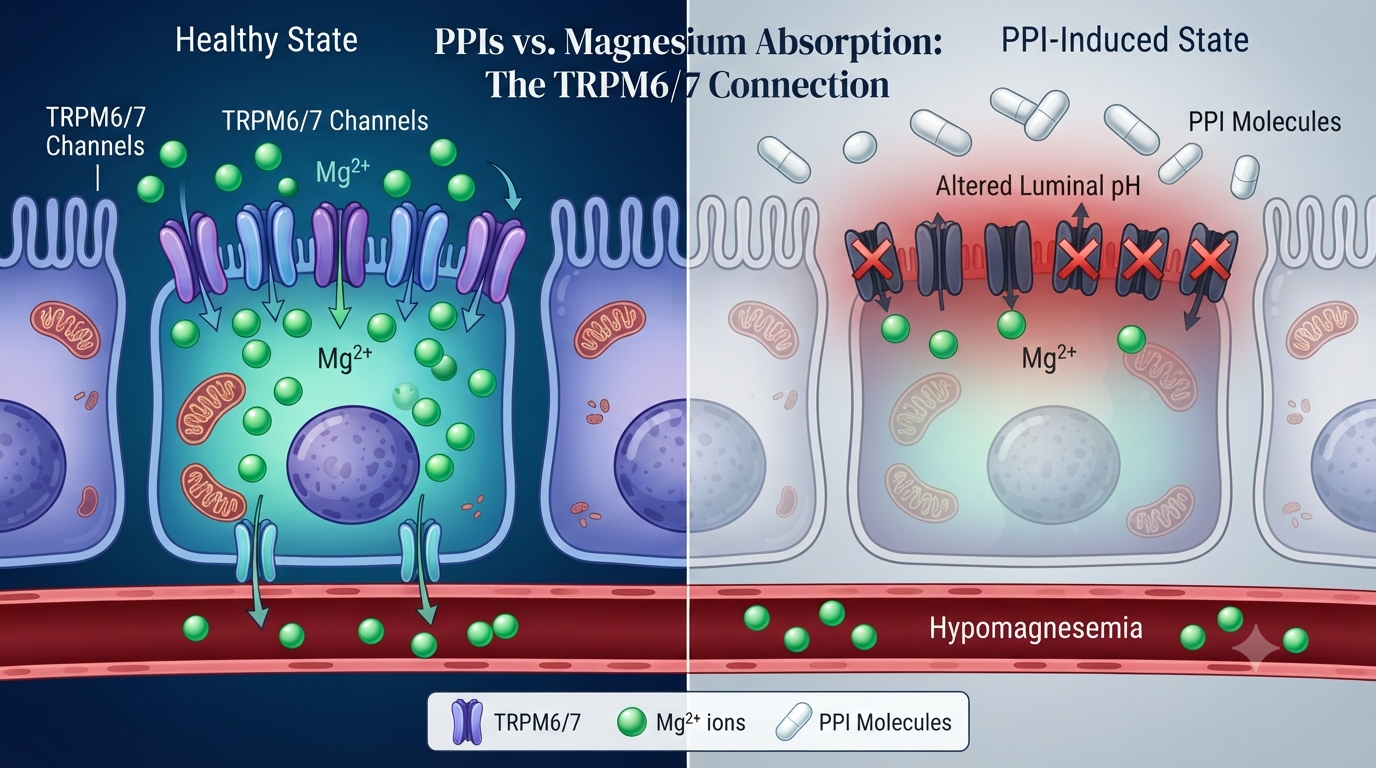
To understand the exact mechanism of PPI-induced mineral loss, scientists look at two specific cellular proteins embedded in the brush border of your intestinal lining (enterocytes): TRPM6 and TRPM7.
TRPM6 and TRPM7 act as specialized ion channels. Think of them as microscopic gated doorways sitting on the surface of your gut cells.
Their primary job is to capture magnesium ions floating past in your digestive tract and pull them safely inside the enterocyte so they can pass into your bloodstream.
For these doorways to open and function correctly, the local chemical environment—specifically the electrical charge and pH level right outside the cell—must be finely balanced.
How PPIs Disrupt the Channels
When long-term Proton Pump Inhibitors change the pH balance and mineral solubility profile throughout the gastrointestinal tract, the electrochemical gradient required by TRPM6 and TRPM7 breaks down.
Research suggests that chronic acid suppression alters intestinal luminal conditions in a way that downregulates or deactivates these transport channels. Without functional TRPM6 and TRPM7 channels actively pulling magnesium through the cell membrane, your intestinal walls effectively lose their ability to absorb the mineral efficiently.
Over months and years, this unaddressed malabsorption slowly drains your body’s total mineral reserves, even if you eat a magnesium-rich diet.
Symptoms to Watch For: Sub-Clinical Mineral Depletion
Because standard routine blood tests measure serum magnesium (the tiny amount circulating freely in your blood plasma rather than stored inside your cells and bones), a PPI-induced deficiency can fly under the radar for a long time.
When cellular magnesium levels drop low enough, you may notice symptoms of Magnesium deficiency such as:
Persistent muscle fasciculations (twitching eyelids or calves)
Unexplained physical fatigue and low energy
Neuromuscular irritability or restlessness
Mild muscle cramps or stiffness after light activity
If you take a PPI daily and experience these symptoms, it is worth discussing your mineral status with a healthcare provider, exploring RBC (red blood cell) magnesium testing, or reviewing your overall supplement and dietary intake.
Summary and Next Steps
Proton Pump Inhibitors are vital medications for managing severe acid damage, but their downstream effects on mineral transport are real. By understanding the cellular mechanics—how altered pH and inhibited TRPM6 and TRPM7 ion channels shut down active intestinal absorption—you can take a more informed, proactive approach to your health.
If you are navigating long-term medication use and want to understand how different mineral forms, dosages, and dietary factors interact with your unique profile, explore our interactive supplement tools and evidence-based guides here at BioLyceum.
References & Scientific Literature
Chetcuti, K., et al. (2015). Proton pump inhibitor-induced hypomagnesemia: a review of the mechanism and clinical implications. World Journal of Gastroenterology, 21(16), 4850–4856. PubMed: 25945032
Groopman, H., et al. (2018). Molecular mechanisms of intestinal magnesium absorption and TRPM6/TRPM7 regulation. American Journal of Physiology-Gastrointestinal and Liver Physiology, 314(2), G120-G130. DOI: 10.1152/ajpgi.00210.2017
U.S. Food and Drug Administration (FDA). (2011). FDA Drug Safety Communication: Low magnesium levels can be associated with long-term use of Proton Pump Inhibitor drugs. Retrieved from FDA Archive
Schlingmann, K. P., et al. (2002). Mutations in TRPM6 cause hypomagnesemia with secondary hypocalcemia. Nature Genetics, 31(2), 166–170. DOI: 10.1038/ng888